Written by: Tyler Himes, Senior Brand Manager – James B. Beam Distilling Co.
Key Takeaways
- A whiskey tasting note is a structured description across appearance, nose, palate, and finish that turns impressions into a record you can revisit.
- Seven practical rules — proper glass, rest time, gentle nosing, small sips, water drops, the Kentucky Chew, and written notes — reduce alcohol burn and reveal flavor.
- The five-step tasting sequence (appearance, nose, palate, mouthfeel, finish) plus a flavor vocabulary organized by sweet, fruit, grain, oak, spice, and earth or smoke gives you clear language for any whiskey.
- Production choices such as mash bill, yeast strain, barrel char, warehouse position, and time directly create the notes you taste, so bourbon, rye, Irish, and Scotch styles each develop distinct profiles.
- Reserve the Beam Made Bourbon Tour & Tasting to practice these skills at The Home of the World’s #1 Bourbon: Jim Beam.
What Are The 7 Rules Of Whiskey?
Seven practical rules guide a productive whiskey tasting. Follow them in order and the burn eases while flavor comes forward.
- Use a proper glass. A tulip-shaped glass such as a Glencairn concentrates aromas toward the nose in a way a wide rocks glass cannot. The shape directs what you smell.
- Let it rest. Pour half an ounce to one ounce and let the glass sit for five minutes. The sharpest ethanol blows off the surface and the aromatics settle into the headspace.
- Nose gently with your mouth slightly open. Start three to four inches above the rim and work down in short sniffs. A closed mouth at cask strength registers mostly alcohol burn and hides the character underneath.
- Take small sips. A whiskey can taste harsh on the first sip and open up by the third, so tiny sips beat big ones. The first sip coats and acclimates the palate, and the second is where tasting actually begins.
- Add a few drops of water. Ethanol binds aroma compounds in the bulk liquid, and adding water disrupts that binding and pushes the molecules to the surface where they enter the headspace and reach the nose. Two or three drops per ounce is the starting point. Add more only after tasting.
- Chew the whiskey to open it up. The Kentucky Chew means taking a sip and working it around the mouth so it coats the top of the tongue, the sides, and the roof. This motion engages every mechanoreceptor in the oral cavity and is the technique popularized by 7th-generation master distiller Fred Noe of Jim Beam. It turns a sip into a full sensory event.
- Write down what you notice. Three words per whiskey — one each for nose, palate, and finish — build a reliable record. Writing anchors the experience and trains the palate faster than tasting alone. To see the Kentucky Chew demonstrated in person, the Beam Made Bourbon Tour & Tasting in Clermont, Kentucky, pairs a guide, a barrel, and a glass in your hand.
How To Taste Whiskey: The Five-Step Sequence
Each step is a deliberate act, not a passive impression. Work through them in order.
- Appearance. Hold the glass up to a light source against a white background. Note the color. Pale gold suggests younger spirit or used casks, deep amber points toward longer aging or active oak, and rich mahogany often signals heavy sherry-cask influence. Color indicates time in wood, char level, and barrel size, but it is not a quality grade. Swirl gently and watch the legs. Slower, thicker legs generally indicate more oils and higher ABV.
- Nose. Bring the glass up with your mouth slightly open. Nose at two heights: high above the glass for light, fast-evaporating notes like fruit, grain, and florals, and near the rim for heavy notes like oak, caramel, char, and leather. Start broad with families such as sweet, fruity, smoky, spicy, grainy, or woody. Then chase specific descriptors and write down the first two or three you clearly recognize.
- Palate. Take a small sip and let it coat the whole mouth before swallowing. Track an arc: entry, where sweetness shows up, mid-palate, where spice, oak, and fruit develop, and finish, which covers everything after swallowing. The Kentucky Chew, swishing the whiskey so it reaches every surface, makes this step work. After swallowing, the warmth that spreads across the chest is what Beam guests know as the Kentucky Hug.
- Mouthfeel. Assess the texture independently of flavor. Mouthfeel is governed by the somatosensory system: mechanoreceptors sense pressure and texture, thermoreceptors sense temperature, and nociceptors sense the chemical heat of ethanol. Reach for words like light and crisp, oily and coating, creamy, syrupy, drying, or tannic.
- Finish. Exhale gently through the nose after swallowing and time what remains. A short finish fades in a couple of seconds, while a long one carries thirty or more seconds. Note whether the finish is sweet, spicy, drying, warming, or clean, and whether new notes appear that were not present on the palate.
A Working Whiskey Flavor Vocabulary
The whiskey flavor wheel, most notably the Scotch Whisky Flavour Wheel developed by the Scotch Whisky Research Institute (SWRI) in Edinburgh, which organizes Scotch whisky aroma and flavor descriptors into segments including peaty, feinty, sulphury, cereal, fruity, floral, and woody, works as a reference rather than a rulebook. The table below gathers the vocabulary you are most likely to reach for mid-sip, grouped by family, with the production source that creates each note.
One spelling note: as a general convention, “whiskey” with an e is the standard spelling in the United States and Ireland, while “whisky” without an e is used in Scotland, Canada, and Japan, though US usage has not always been consistent and some US brands and legal regulations use the “whisky” spelling. Both refer to the same category of grain-based distilled spirit.
What Are The Tasting Notes Of Different Whiskeys?
Now that you have a working vocabulary, you can see how it maps onto different whiskey styles. Production method is the single biggest predictor of what a whiskey will taste like. The table below covers the major styles a beginner is likely to encounter, with the defining production characteristic and the notes to expect on first approach.
Why Whiskey Tastes The Way It Does
Every note in a glass traces back to a handful of levers: mash bill, yeast, barrel, time, and water. Knowing the cause makes the vocabulary stick.
Mash Bill. The grain recipe sets the flavor foundation. Corn provides natural sweetness and body. Rye grain contributes peppery, dry, herbal notes through its phenols and terpenes, while malted barley adds nutty, biscuity character and the enzymes that drive fermentation.
Yeast. Fruity and floral notes such as apple, pear, banana, peach, and rose come from esters produced by yeast during fermentation. The specific yeast strain shapes the ester profile of every batch. At the James B. Beam Distilling Co., the same specific yeast strain has been used since the end of Prohibition in 1933, when Jim Beam cultivated a new strain to replace the culture lost during Prohibition; Jim Beam personally safeguarded some of it at home on weekends. He carried it back and forth in his Cadillac to keep it safe. That same signature strain still runs through nearly every Beam bourbon today.
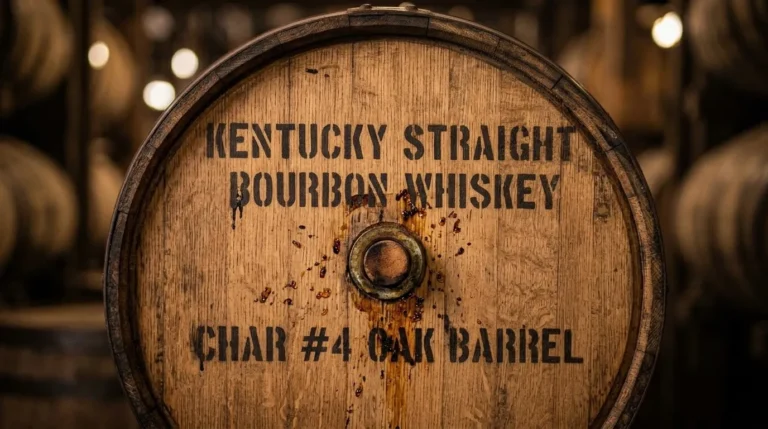
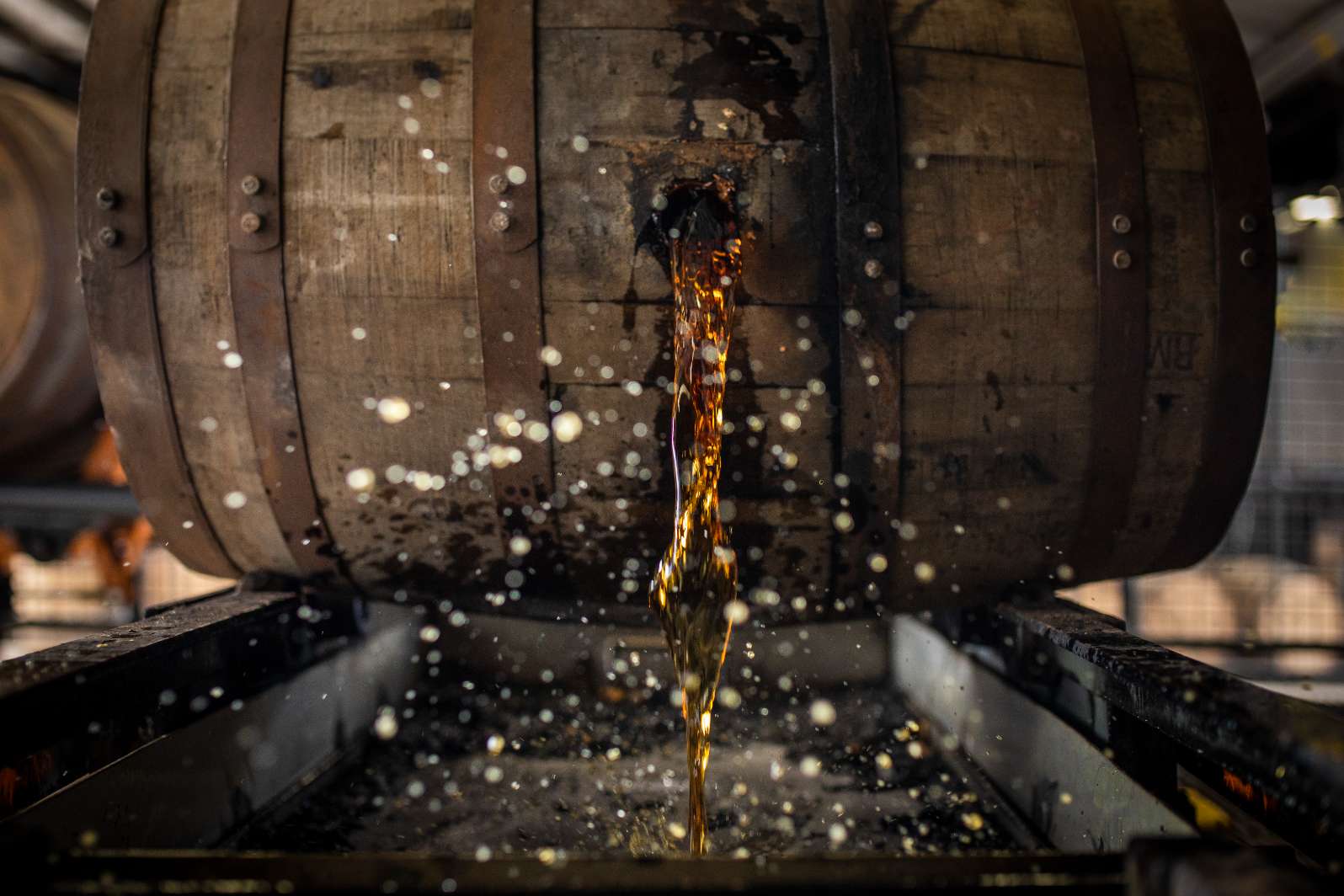
Barrel. The barrel is responsible for roughly 60–70% of a mature whisky’s flavor and 100% of its color. Vanilla and caramel do not come from the grain. Lignin breakdown in charred oak releases vanillin, and hemicellulose degradation yields wood sugars that caramelize into caramel, toffee, maple, and butterscotch. James B. Beam Distilling Co. taps its high wine into brand-new, level-4 char American white oak barrels, often called alligator char.
Time And Warehouse Position. Kentucky’s wide-ranging four-season climate of cold winters and hot summers drives bourbon in and out of the wood, which accelerates flavor extraction. In multi-story rick houses, barrels on higher floors experience greater temperature swings, and these more frequent and severe thermal fluctuations drive whiskey in and out of the wood, accelerating extraction and causing the whiskey to mature faster than barrels on lower floors. Roughly 3.1 million barrels age across approximately 100 warehouses in Clermont, Boston, and Frankfort, Kentucky. As 8th-generation master distiller Freddie Noe puts it, “Distillation is the science, but maturation is the art.”
Water And Limestone. Kentucky’s natural limestone shelves filter water to create iron-free, calcium- and magnesium-rich water that contributes to bourbon flavor and fermentation, though many Kentucky distilleries now draw from a mix of water sources, including treated municipal water with much of its mineral content removed, and limestone water is not considered essential to bourbon production. This regional water profile forms a fourth environmental factor that shapes every drop made in Clermont.
Whiskey Tasting Notes Template
Use this template while the glass is in your hand. Fill in the fields in sequence, then compare your notes with the worked example below.
Template Fields
- Name: _______________
- Proof / ABV: _______________
- Style: _______________
- Appearance: Color (pale gold / amber / deep amber / mahogany); legs (fast / slow)
- Nose: Intensity (light / medium / pronounced); 2–3 aroma descriptors
- Palate: Entry note; mid-palate note; any spice or oak development
- Mouthfeel: Weight (light / medium / full); texture (crisp / oily / creamy / drying)
- Finish: Length (short / medium / long); character (sweet / spicy / drying / warming / clean)
- Water Added? Yes / No — note any change
Worked Example: Jim Beam Black Extra-Aged Bourbon
- Name: Jim Beam Black Extra-Aged
- Proof / ABV: 90 proof / 45% ABV following its 2024 re-launch (previously 86 proof / 43% ABV)
- Style: Kentucky Straight Bourbon
- Appearance: Deep amber; medium-slow legs
- Nose: Pronounced; vanilla, toasted oak, dried stone fruit
- Palate: Sweet caramel entry; mid-palate develops baking spice and oak; light dried fruit on the back
- Mouthfeel: Medium-full; slightly oily and coating
- Finish: Medium-long; warming, with lingering oak and a touch of spice
- Water Added? 3 drops — vanilla note became more distinct, spice rounded slightly
Putting Your Whiskey Skills To Work At The James B. Beam Distilling Co.
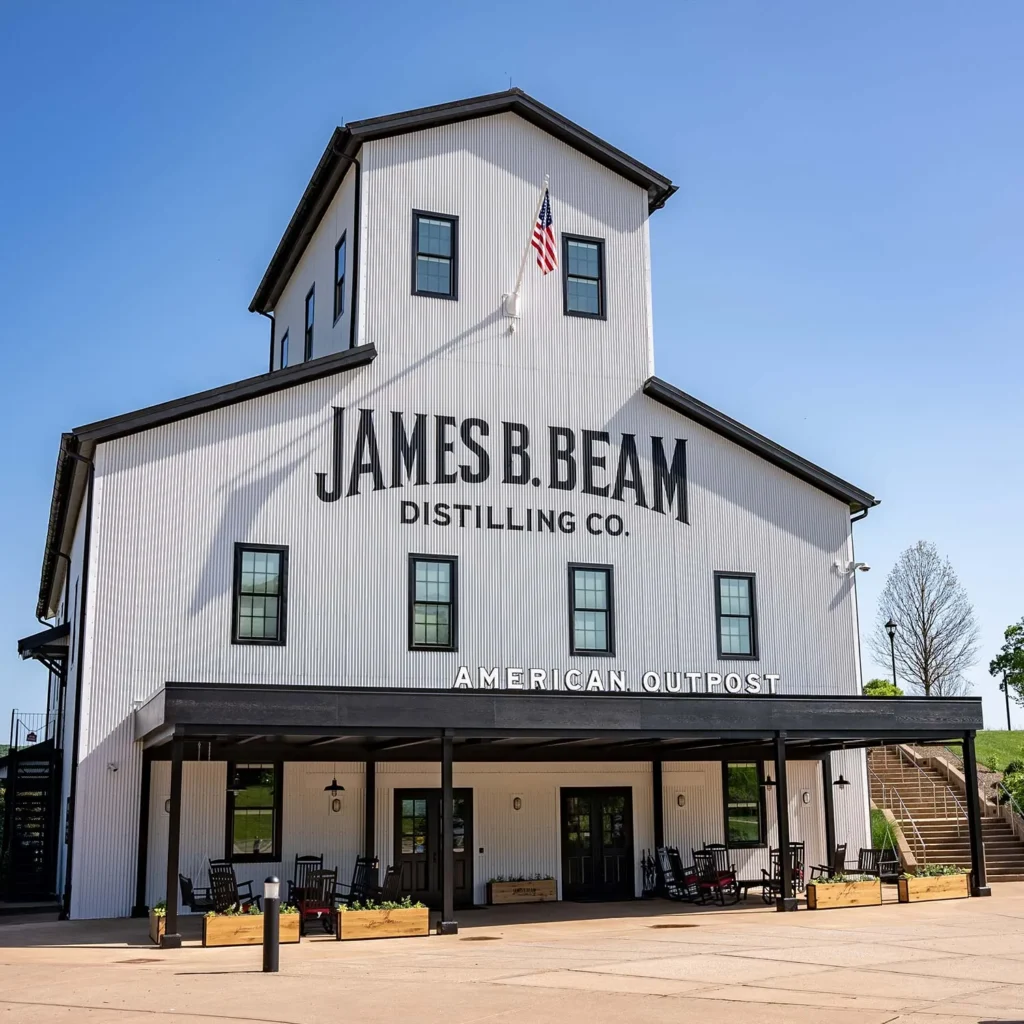
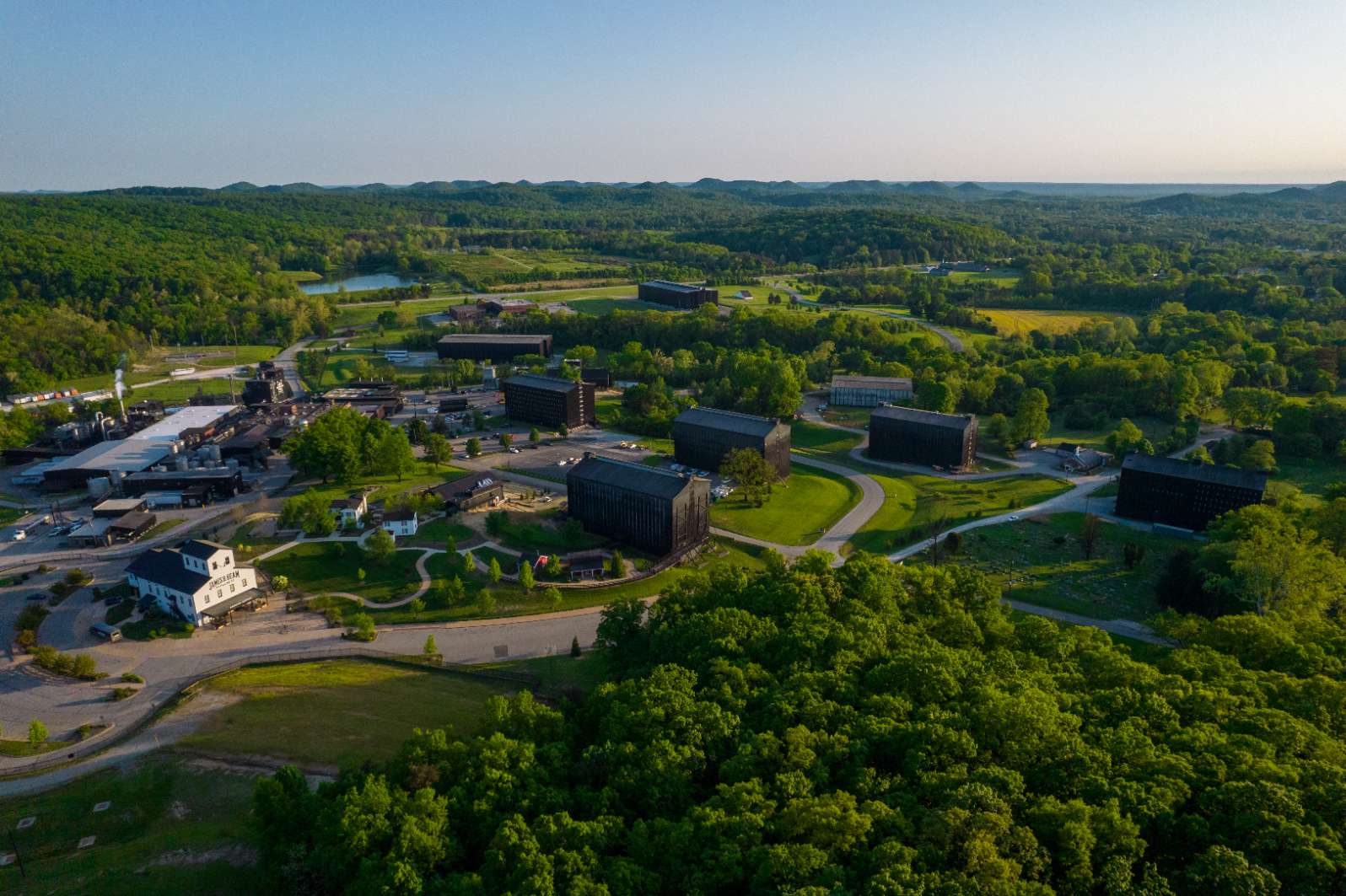
The most vivid way to practice this vocabulary is at the place where the whiskey is made. The James B. Beam Distilling Co. in Clermont, Kentucky, The Home of the World’s #1 Bourbon: Jim Beam, sits about 30 minutes south of Louisville, right off Interstate 65, and is the first stop on the Kentucky Bourbon Trail.
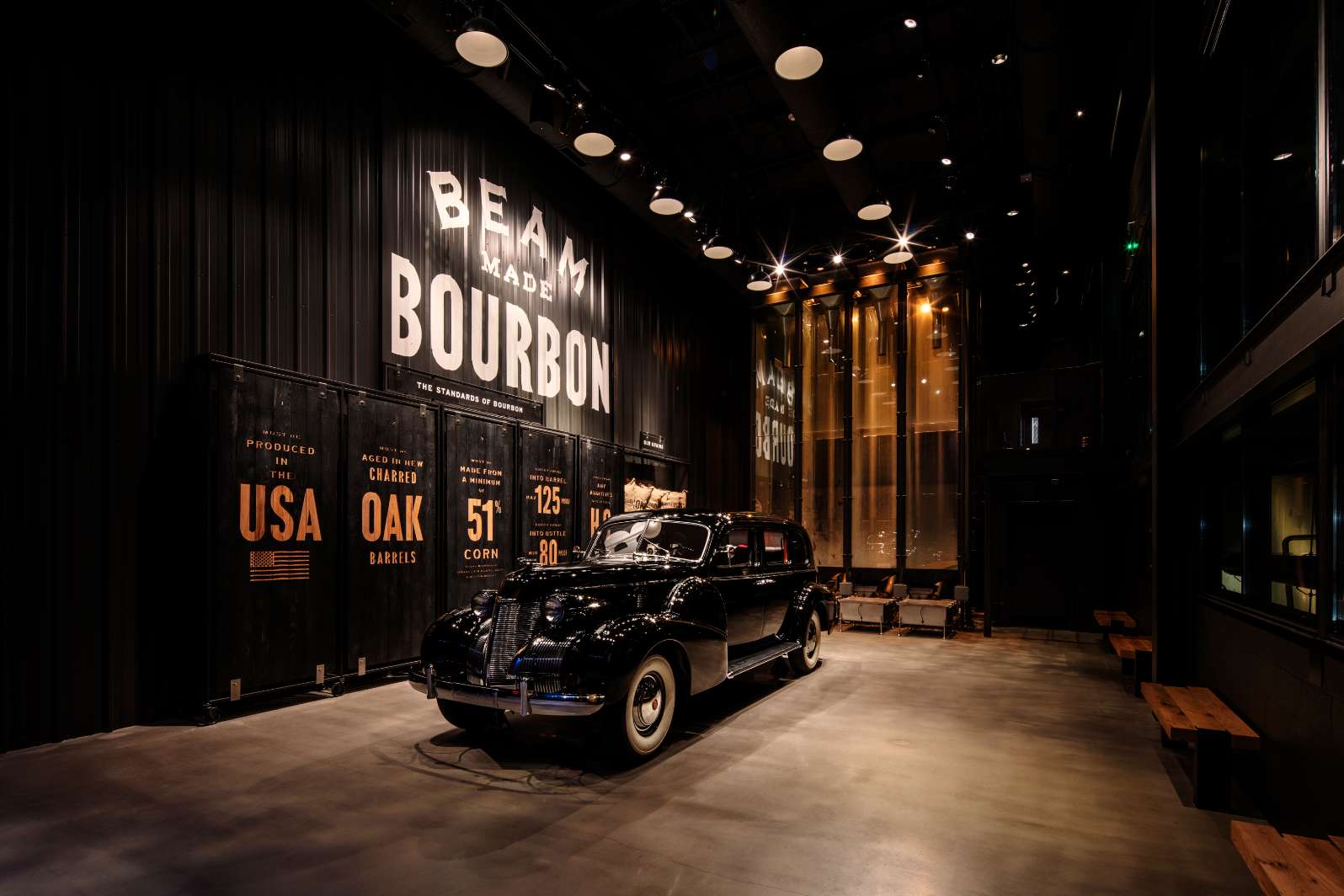
The flagship Beam Made Bourbon Tour & Tasting is a 75-minute, grain-to-glass experience priced at $30 plus tax and fees, capped at 24 guests. Five bourbons are tasted at the moments that explain them. Jim Beam White is tasted at Jim Beam’s original Cadillac, the same one that carried the yeast strain. Jim Beam Black is poured at the mill, Basil Hayden while filling a barrel, Knob Creek at the barrel dump, and a rotating “surprise and delight” often features Booker’s. Each pour lands with the story behind it, so the notes stay with you.
Hands-on moments are built into the tour by design. Guests fill a barrel, dump a barrel, and can bottle their own Knob Creek on the T-Line. The bottling experience costs $59.99 and includes rinsing, running the bottle down the line, and sealing it with a thumbprint pressed into the wax. Engraving is available for $10.
The distillery is also the home of the entire Small Batch Collection, including Knob Creek, Basil Hayden, Booker’s, and Baker’s, plus Little Book and Hardin’s Creek. Guests who want to go deeper have options. The Maturation Matters warehouse experience lets you thief whiskey straight from the barrel. The Fred B. Noe Craft Distillery Tour shows where innovation expressions are made. Whiskey Wednesday is hosted personally by 7th-generation master distiller Fred Noe. Fred and Freddie Noe are on site nearly every day.
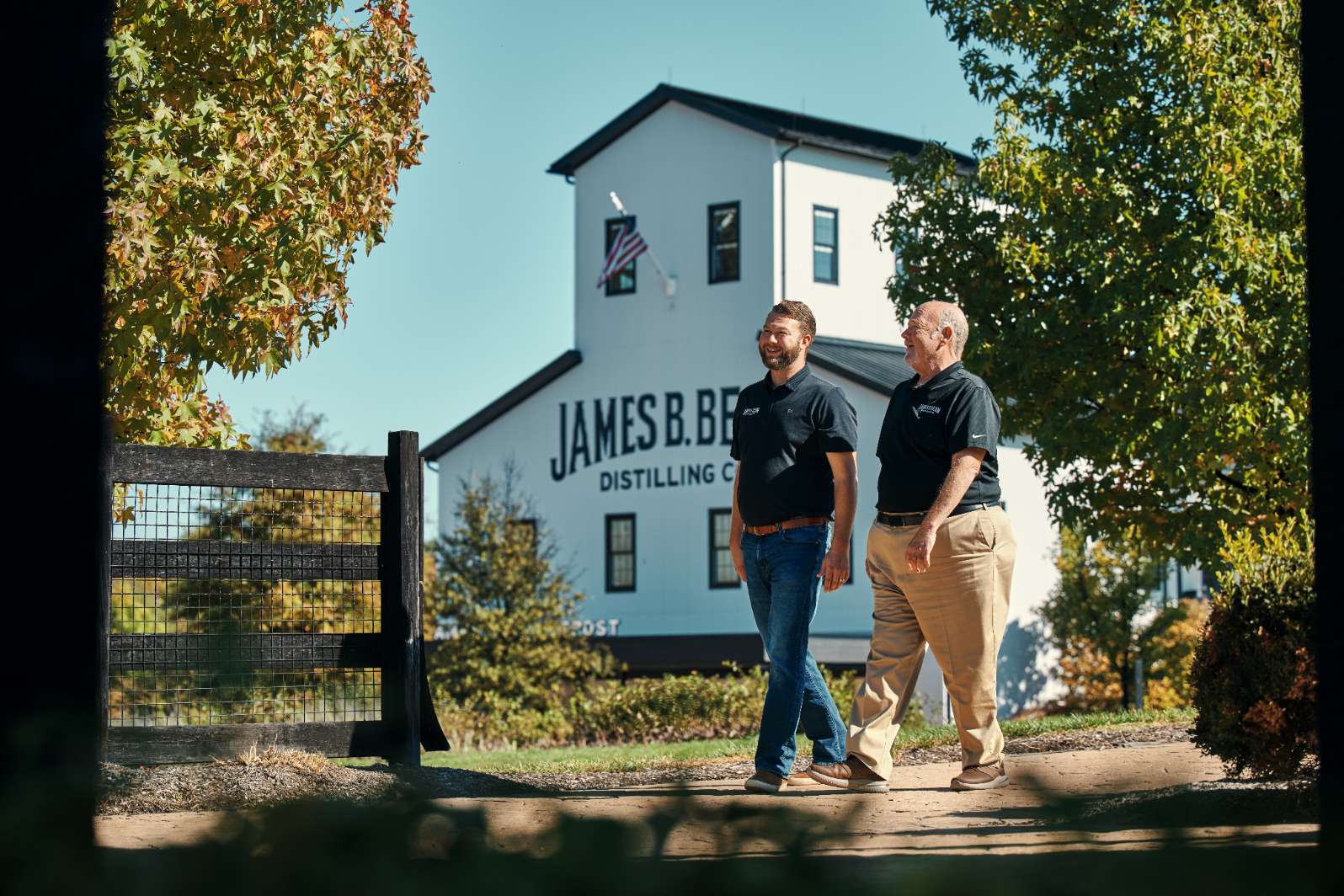
The distillery holds a 4.7-star rating from more than 1,400 Google reviews, which shows that guests leave with more than they arrived with. The Kitchen Table restaurant turns a tour into a full day out, with a menu of Kentucky-inspired fare including a sourdough pizza made with the same yeast strain used in the bourbon.

Come Taste Whiskey Where It Is Made
The method is five steps. The vocabulary is organized and ready. The template waits for your notes. The most immersive place to put all of it to work is at the distillery where eight generations of one family have been making bourbon since 1795, where the grain, the yeast, the barrel, and the Kentucky climate are all visible, touchable, and tasteable in a single afternoon.
Frequently Asked Questions
What Is A Whiskey Tasting Note?
A whiskey tasting note is a structured description of what you perceive in a glass of whiskey, typically recorded across appearance, nose, palate, and finish, often with an overall score added. It is a description, not a score or a judgment. A good tasting note uses your own words and captures what you actually noticed, rather than what you think you are supposed to say. Even three words per checkpoint are enough to build a useful record.
How Many Sips Does It Take To Taste Whiskey Properly?
At least two or three sips, taken deliberately, give you a fair read. The first sip primarily coats and acclimates the palate to the alcohol, and the second and third sips are where you actually begin tasting the whiskey. A whiskey that seems harsh or closed on the first sip can open up considerably by the third, so the first impression often tells only part of the story.
Should I Add Water Or Ice To Whiskey?
For tasting purposes, a few drops of room-temperature still water are preferable to ice. Water releases aroma compounds that ethanol holds in the bulk liquid, which makes the whiskey more expressive on the nose and palate. Ice does the same dilution work but also chills the spirit, which suppresses the volatile aromatics you have just waited five minutes to develop. For casual drinking, ice is a matter of personal preference, and any choice works. For tasting, start neat, then add two or three drops of water, taste again, and stop before over-diluting.
What Are The Four Flavors Of Whiskey?
The four primary taste sensations detectable on the palate are sweet, sour, salty, and bitter, but whiskey’s complexity comes primarily through aroma rather than taste alone. More than 80% of what we perceive as flavor arrives through retronasal olfaction, meaning aromas reach the olfactory receptors from the back of the throat while swallowing. In practice, whiskey flavor vocabulary is organized into broader families: sweet, such as vanilla, caramel, and honey; fruit, such as apple, dried apricot, and raisin; grain, such as bread, malt, and biscuit; oak, such as toasted wood, coconut, and leather; spice, such as pepper, clove, and cinnamon; and earth and smoke, such as peat, ash, and brine.
Do I Need A Special Glass To Taste Whiskey?
A tulip-shaped glass, with the Glencairn as the most widely used example, makes a meaningful difference. Its wide bowl collects aromas and its tapered neck concentrates them toward the nose, so you smell more of what is actually in the glass before you sip. A wide rocks glass lets aromas escape before they reach your nose, which flattens the tasting experience. You do not need an expensive glass, but the shape matters.
How Do I Describe Whiskey If All I Taste Is Burn?
The burn is ethanol activating heat receptors in the mouth, so it is a real physical sensation rather than a flavor. To get past it, let the glass rest for five minutes after pouring, nose with your mouth slightly open rather than closed, take a very small first sip to coat the palate, and add two or three drops of room-temperature water before the second sip. The water lowers ethanol’s dominance just enough that the actual flavor compounds, such as vanilla, caramel, fruit, and spice, can come through. If burn is still all you get, the whiskey may simply be higher proof than your palate is accustomed to. For those sensitive to burn, bourbon guides recommend starting in the 80–90 proof range and avoiding barrel-proof, barrel-strength, or cask-strength expressions that run 110–130+ proof.
Are Whiskey Tasting Notes Subjective?
Whiskey tasting notes blend objective chemistry with individual perception. The chemical compounds in a whiskey are objective facts. Vanillin produces vanilla character, guaiacol produces smoky character, and oak lactones produce coconut and woody notes regardless of who is tasting. What varies between individuals is sensitivity. Detection thresholds for specific aroma compounds differ significantly from person to person, and some people have specific anosmias to certain notes entirely. This means two careful tasters can produce different notes from the same glass without either being wrong. The goal of a tasting note is to record what you actually perceive, consistently, so your notes become comparable over time.
This article is promotional content of James B. Beam Distilling Co. Please practice responsible drinking.