Written by: Tyler Himes, Senior Brand Manager – James B. Beam Distilling Co.
Key Takeaways
- A distillery turns grain starch into fermentable sugar, ferments it into a low-alcohol wash, then distills, cuts, ages, and bottles the spirit.
- The six core steps, mashing, fermentation, distillation, cuts, maturation, and proofing, all happen at scale inside the James B. Beam Distilling Co. in Clermont, Kentucky.
- Fermentation is where alcohol is actually created, and the Beam family’s wild yeast strain from the 1930s still drives nearly every bourbon today.
- Maturation in new charred oak barrels supplies most of bourbon’s final flavor and all of its color, with millions of barrels aging across Beam’s Kentucky warehouses.
- Plan Your Beam Made Bourbon Tour & Tasting to spend the day at The Home of the World’s #1 Bourbon: Jim Beam.
The Main Steps In A Distillery
- Mashing, grain starch converts to fermentable sugar in a mash tun.
- Fermentation, yeast converts sugar to ethanol, producing a low-alcohol wash.
- Distillation, heat separates ethanol from water by using their different boiling points.
- Cuts, the distiller separates heads, hearts, and tails to isolate the best fraction.
- Maturation, new charred oak barrels add color and most of the flavor.
- Proofing And Bottling, water reduces the spirit to bottling strength before it is sealed and shipped.
Step 1: Raw Material And Mashing, Turning Starch Into Sugar
Grain starch cannot ferment on its own. Enzymes must break long starch chains into simple sugars before yeast can work. That conversion happens in the mash tun, and the order of grain addition matters.
Corn goes in first at the highest temperature, followed by rye, and finally malted barley at a lower temperature to activate its enzymes for starch-to-sugar conversion. The order matters because malted barley is the enzymatic engine of the mash. It provides the enzymes that convert corn and rye starches into fermentable sugar while also contributing biscuit, toast, and slight nutty flavors.
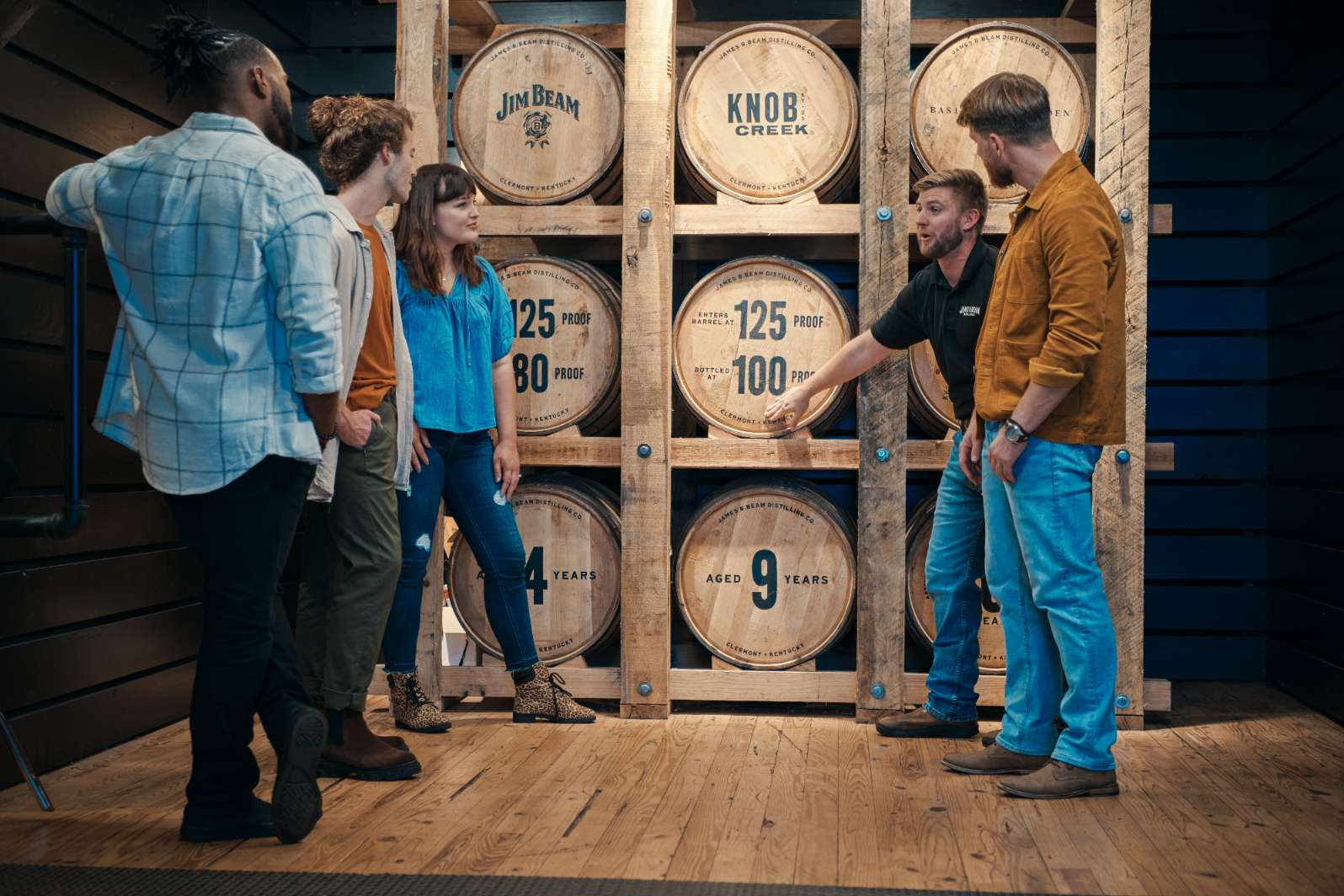
For a spirit to be called bourbon, federal law requires it to be made in the United States from a mash bill of at least 51% corn, distilled to no more than 160 proof, aged in new charred oak barrels, entered into the barrel at no more than 125 proof, bottled at no less than 80 proof, and contain no additives other than water.
At the James B. Beam Distilling Co., proprietary mash bills guide every batch. The grain sequence follows the same logic it has since Jacob Beam sold his first barrel in 1795. Get the starch conversion right, and everything downstream improves. Once the mash is full of fermentable sugar, the next step is to let yeast turn that sugar into alcohol.
Step 2: Fermentation, Where The Alcohol Is Actually Made
Fermentation is where alcohol comes into existence. Yeast consumes the sugars released during mashing and produces ethanol and carbon dioxide as byproducts. Bourbon fermentation typically takes three to five days, resulting in a low-proof wash of around 8–10% alcohol, essentially a strong, unhopped beer. Distillation then concentrates what fermentation creates and cannot manufacture alcohol that was never there.
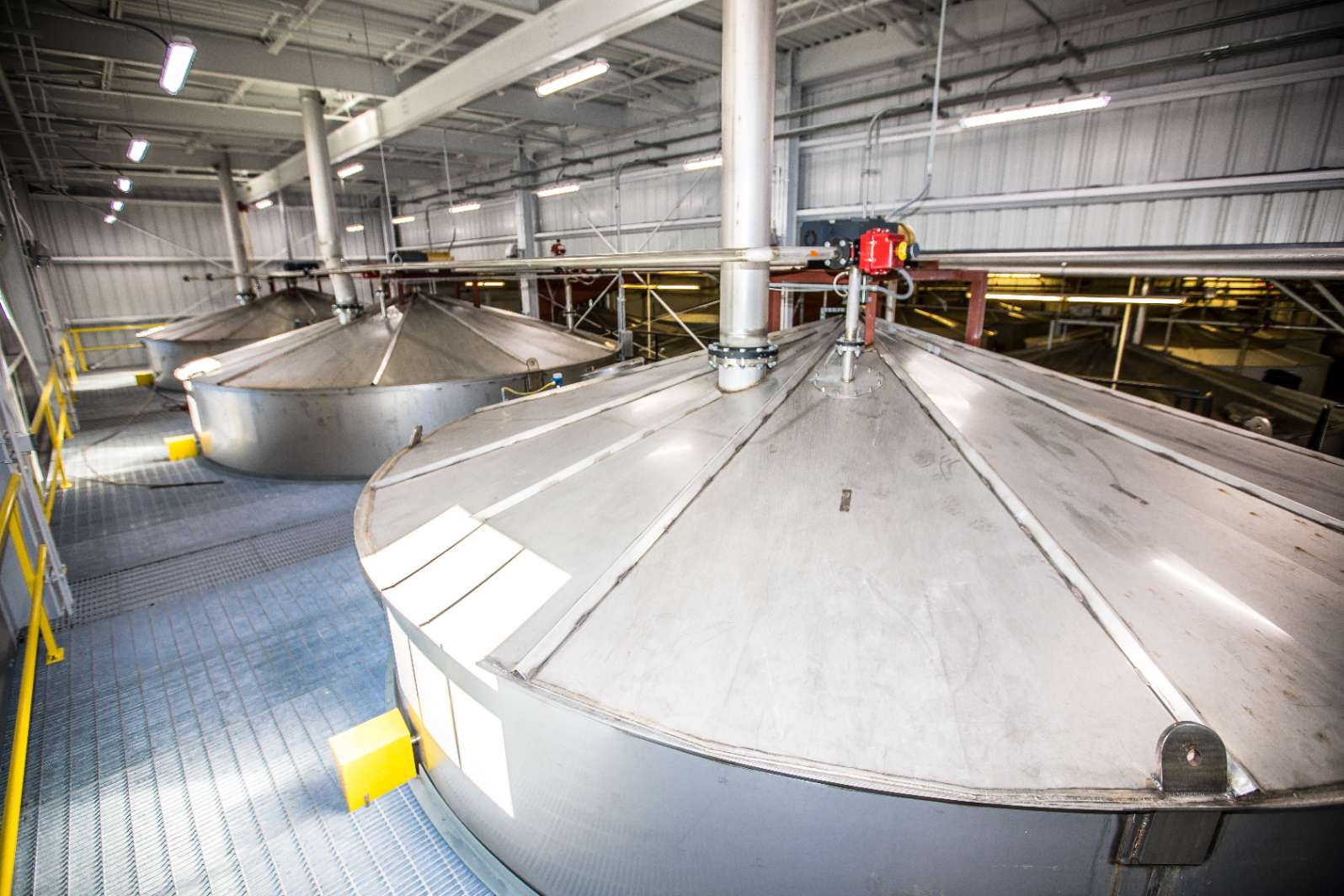
The yeast strain a distillery uses is one of its most closely guarded assets. James B. Beam Distilling Co. uses a signature wild yeast strain that Jim Beam captured at his Bardstown home in the early 1930s. The story behind that safeguarding is one of bourbon’s great living legends. Jim Beam carried the strain back and forth to the distillery in his Cadillac every day to keep it safe. That same signature strain still runs through nearly every Beam bourbon today, a direct, biological link to the man who rebuilt the distillery after Repeal.
Taste That 90-Year-Old Yeast Strain On The Beam Made Bourbon Tour & Tasting and experience its impact in the glass.
Step 3: Distillation And The Boiling-Point Principle
Distillation works because ethanol and water boil at different temperatures. Pure ethanol boils at 78.2°C (173°F) at standard atmospheric pressure, while water boils at 212°F (100°C). When a distiller heats fermented wash, ethanol-rich vapor rises first. That vapor travels through the still’s neck and into a condenser, where it cools back into liquid that is now far more concentrated than the wash it came from.
Under U.S. standards, bourbon distillation must not exceed 160 proof (80% ABV). This cap preserves the grain-derived congeners responsible for flavor. Distilling higher strips the spirit toward neutral territory. Staying within the limit lets the corn, rye, and barley character survive into the barrel.
At the James B. Beam Distilling Co., the centerpiece of this step is impossible to miss. A 65-foot legacy still known as “the Hardest Working Still in America” towers over the still house. Standing beside it, you feel why scale matters. The vapor rising through that column, condensing, and flowing toward the cut point follows the same process that has run on this site for generations, only at a volume that makes the physics feel visceral.
Pot Still Vs. Column Still: How Still Design Shapes Flavor
Two fundamentally different still designs dominate spirits production worldwide, and the choice between them shapes everything a drinker tastes in the glass. The table below compares how pot and column stills operate, what proof they typically produce, and how much flavor they retain, the key differences that explain why bourbon distillers choose one over the other.
| Attribute | Pot Still | Column Still |
|---|---|---|
| Operation | Batch, filled, run, emptied, reset | Continuous, wash enters while steam rises |
| Typical Exit Proof | 65–80% ABV | Up to 95% ABV |
| Flavor Retention | High, more congeners survive | Lower, congeners stripped out |
| Best Suited To | Full-bodied, character-driven spirits | High-volume, consistent, lighter spirits |
Pot stills operate in batches. A charge of fermented wash is loaded into a vessel and heated, and the resulting alcohol vapors rise through a curved neck into a condenser. Each batch must be emptied, cleaned, and recharged before the next run begins. Column stills, also called continuous stills or Coffey stills after Aeneas Coffey’s 1831 patent, operate on a continuous feed principle. Wash enters at the top of an analyzer column and descends against rising steam. Alcohol-rich vapor is progressively concentrated through a series of perforated plates.
Most large-scale bourbon production, including at the James B. Beam Distilling Co., relies on column still technology for the primary distillation run. Many distilleries then pass the spirit through a second vessel, a doubler or thumper, to refine character further. The 160-proof distillation cap for bourbon exists to preserve congeners, since distilling at higher proofs strips them and yields something closer to neutral grain spirit than whiskey.
Step 4: Making Cuts, Heads, Hearts, And Tails
Only a portion of what comes off the still belongs in the barrel. As a distillation run progresses, the composition of the vapor changes. The distiller’s job is to capture only the fraction worth keeping.
Hearts are the ethanol-dominant middle fraction that vaporizes within a stable temperature range of 78.3°C to 82°C, complemented by balanced esters and phenols that define a spirit’s signature aroma and flavor profile. This is the fraction that goes into the barrel.
Tails emerge in the late stage of distillation as boiler temperatures rise and ethanol content depletes, rich in heavy, low-volatility compounds including fusel oils, heavy fatty acids, and residual water. Professional distillers collect the fraction separately and reintroduce it into the next batch of un-distilled wash, recovering residual ethanol and minimizing production waste.
The cut point, the exact moment the distiller switches from collecting hearts to collecting tails, is where craft lives. Master distillers intentionally reject absolute purity because fully refined ethanol tastes flat, bland, and one-dimensional. Strategically retaining micro-levels of late heads adds delicate floral brightness and aromatic lift. Subtle early-tail compounds contribute rich mouthfeel and nutty depth.
Step 5: Maturation And The Barrel, Where Color And Most Flavor Develop
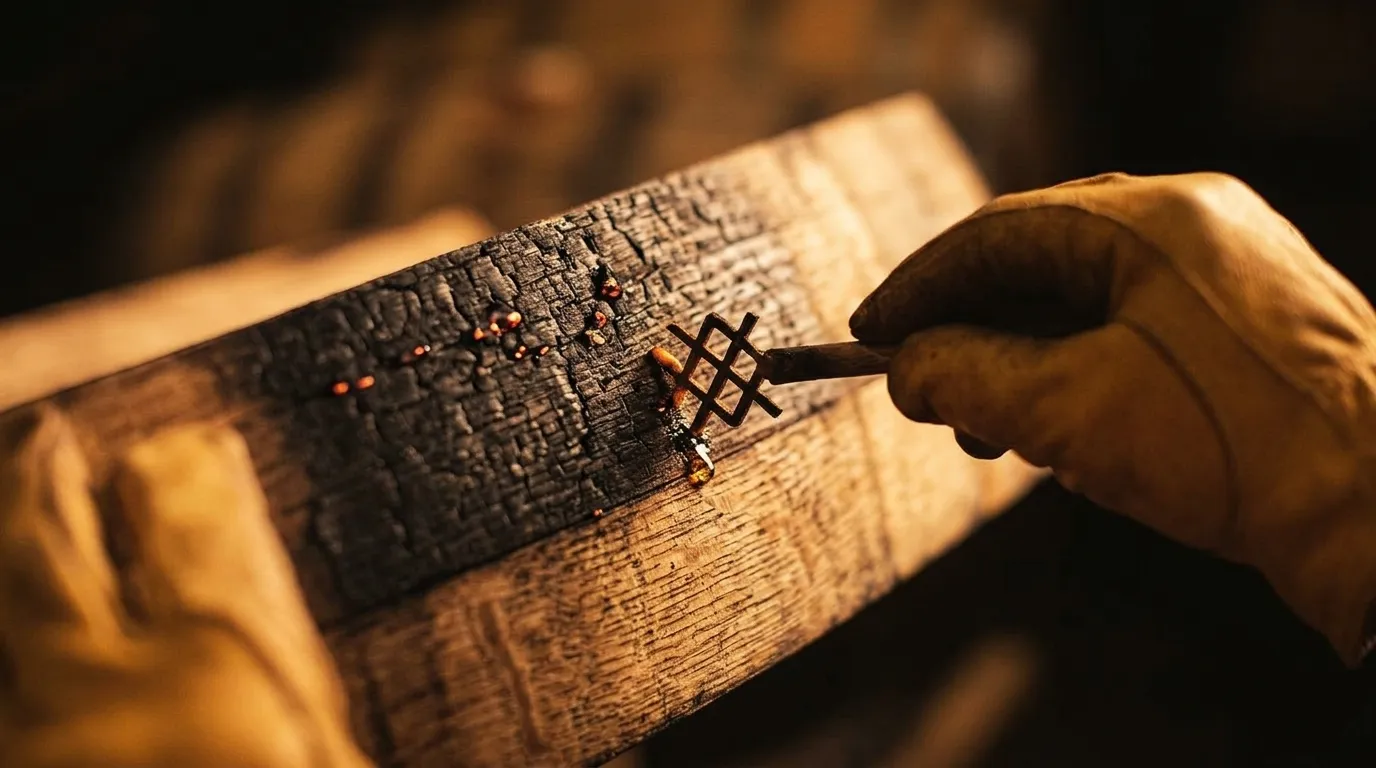
New make spirit comes off the still completely clear. Every drop of color in a bottle of Jim Beam comes from the barrel, and so does the majority of what you taste. Some estimates attribute 60–70% of bourbon’s final taste profile to the barrel rather than the grain, with vanillins and lignins in the charred oak providing vanilla and caramel notes and tannins adding structure and dryness.
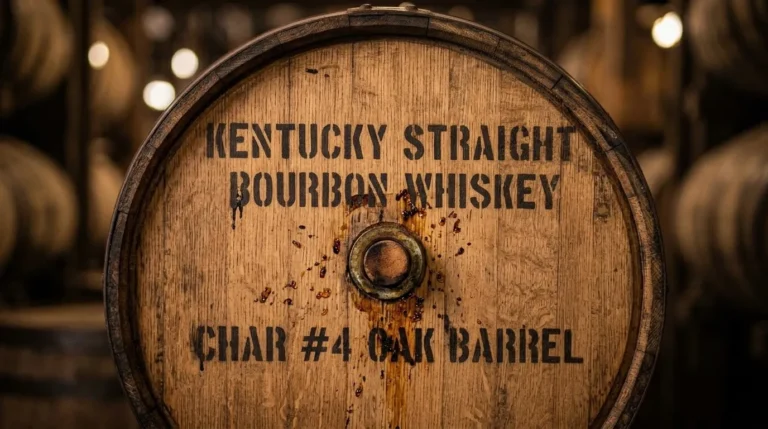
James B. Beam Distilling Co. taps its high wine into brand-new, level-4 char, American White Oak barrels, known as “alligator char,” though the evidence does not establish that this exact barrel specification has been used continuously since Jacob Beam’s first barrel sale in 1795. The char creates a caramelized layer of wood sugars and an activated carbon filter that softens harsh alcohol. The spirit then cycles in and out of the wood across Kentucky’s dramatic seasonal temperature swings.
The scale of maturation at the James B. Beam Distilling Co. is staggering. Roughly 3.1 million barrels are aging across approximately 100 warehouses in Clermont, Boston, and Frankfort, Kentucky. As 8th-generation master distiller Freddie Noe puts it, distillation is the science, and maturation is the art.
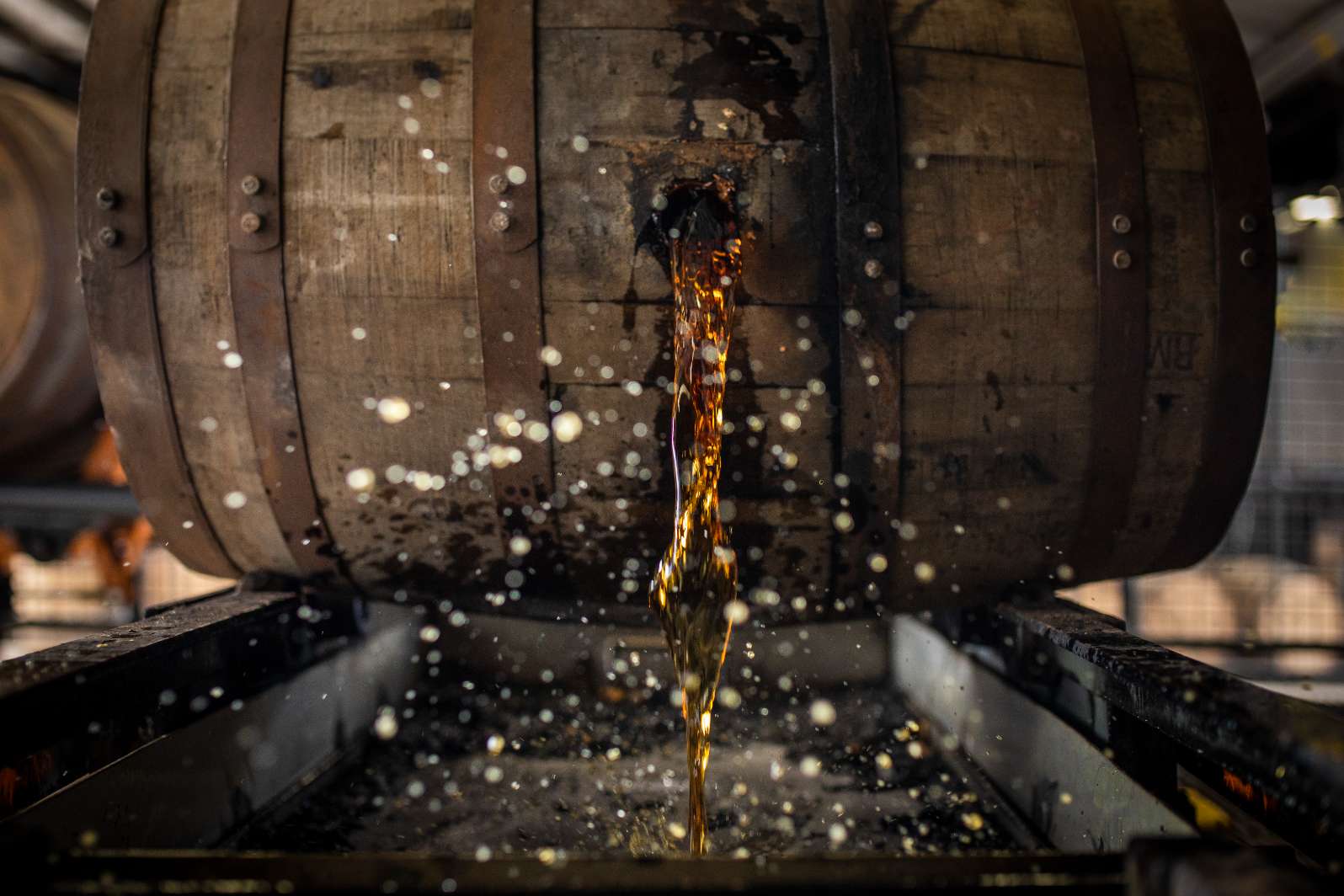
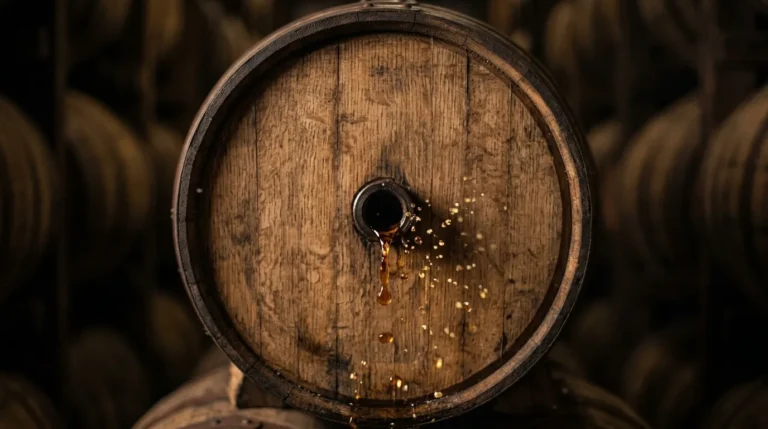
Visit The Rackhouses And Thief Whiskey Straight From The Barrel On The Beam Made Bourbon Tour & Tasting to experience this stage up close.
Step 6: Proofing, Blending, And Bottling
Whiskey bottled for domestic sale must be at no less than 80 proof (40% ABV). After the barrel is dumped, the distiller adds pure water to reduce the spirit to its target bottling strength, the only additive bourbon law permits. Blending across barrels ensures consistent flavor in every bottle bearing the same label. This discipline requires the same sensory precision as the cut point decisions made earlier at the still.
At the James B. Beam Distilling Co., the T-Line bottling station is where guests bottle their own Knob Creek, rinsing the bottle, running it down the line, and sealing it with a thumbprint pressed into the wax. On the Beam Made Bourbon Tour, guests use that same line and finish their visit by pressing a thumbprint into the wax seal.
Now that you understand each production step, you can see how the tour brings them to life.
What You See At Each Station: Inside The James B. Beam Distilling Co.
The Beam Made Bourbon Tour moves through the working distillery in the same sequence the bourbon follows, grain to glass. Every station you visit corresponds to a step in the process above.
The tour begins with limestone water and grain. Kentucky’s limestone geology filters iron from the water supply while adding calcium and magnesium, conditions that support healthy yeast fermentation and have made this region the center of American bourbon production for more than two centuries. The grains arrive, are milled, and enter the mash tun in the same sequence described earlier, corn first at high heat, rye next, malted barley last.
Moving through the fermentation area, you encounter the open-top fermenters where the Beam family’s wild yeast strain, the same one Jim Beam carried in his Cadillac, is converting sugar to alcohol right in front of you. The wash bubbles and churns. The smell is warm, grainy, and faintly sweet.
Then comes the still house, where the 65-foot Hardest Working Still in America dominates the space. Vapor rises, condenses, and flows toward the cut point. The scale makes the boiling-point principle tangible in a way no diagram can match.
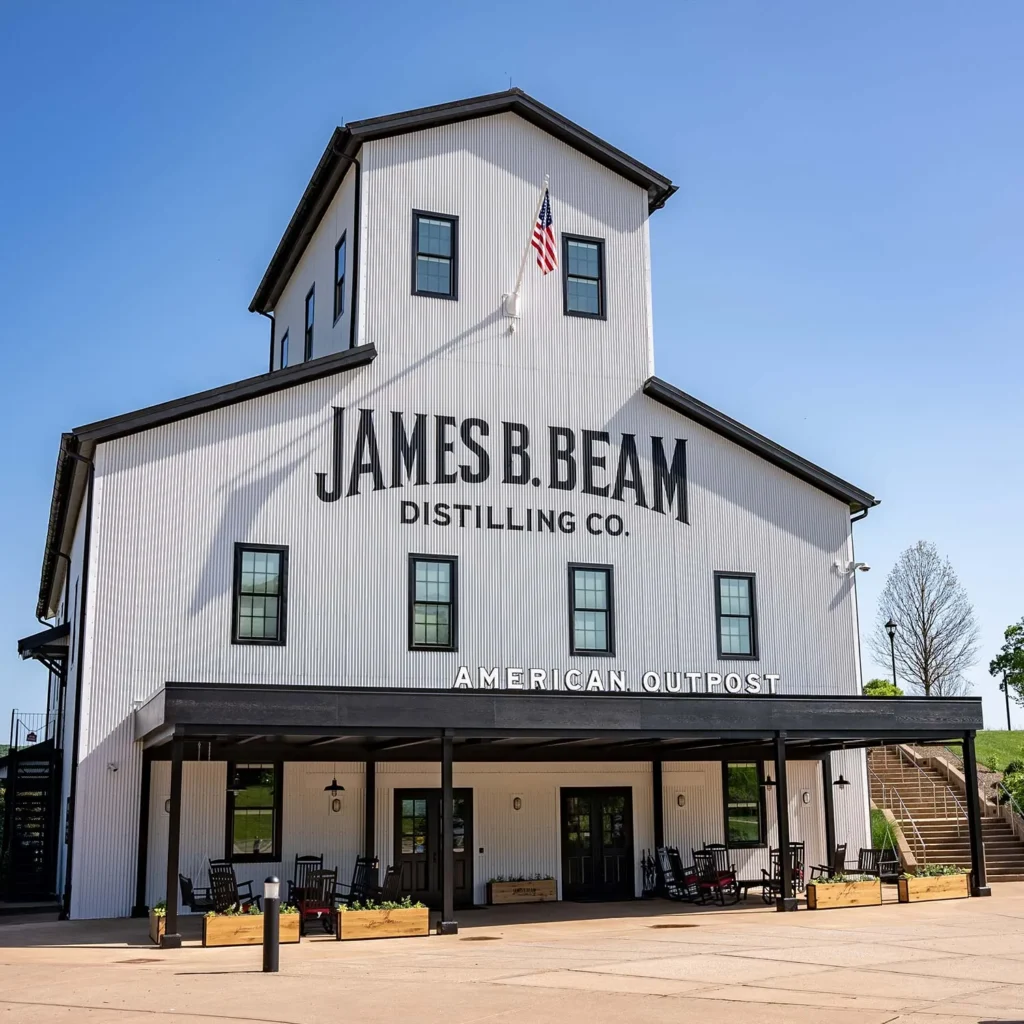
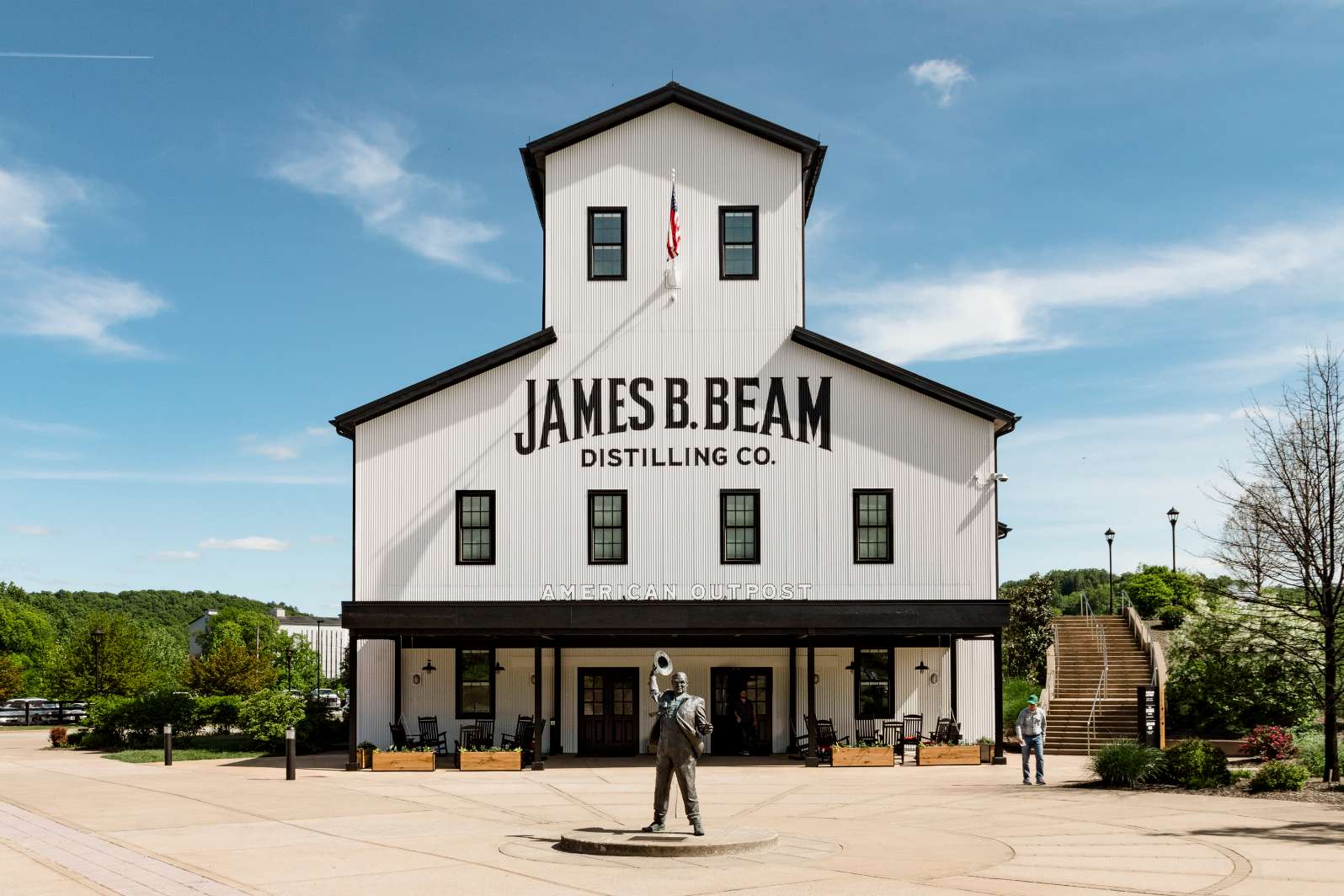
From the still, the tour moves to barrel filling and dumping, the hands-on heart of the experience. Guests fill a barrel and dump a barrel, feeling the weight of the wood and the smell of the char. Five bourbons are tasted along the path, Jim Beam White at Jim Beam’s original Cadillac, Jim Beam Black at the mill, Basil Hayden while filling a barrel, Knob Creek at the barrel dump, and a rotating surprise pour. The tour closes at the American Outpost, where the tasting concludes and guests can bottle their own Knob Creek on the T-Line.
Why Distilling Is Illegal In The US Without A License
Unlicensed home distillation of spirits is a federal felony in the United States, with no exceptions for misdemeanor or gray-area cases. 27 CFR § 19.51, titled “Home production of distilled spirits prohibited,” is the federal regulation that expressly bans the production of distilled spirits at a residence.
The prohibition has deep roots. The federal ban on home distilling was first enacted in 1868 to combat rampant evasion of the federal excise tax on spirits, and violations are felonies punishable by a fine of up to $10,000, imprisonment for up to five years, or both.
Licensed commercial distilleries operate legally by meeting a separate, rigorous set of requirements. Under 27 CFR § 19.71, a person may only conduct distilling operations on the bonded premises of a distilled spirits plant registered with the Alcohol and Tobacco Tax and Trade Bureau (TTB), with an operating permit and/or a basic permit. The TTB regulates distilled spirits production under 27 CFR Part 19, which governs still registration and proof requirements. Distillers must hold a Distilled Spirits Plant (DSP) permit before operating any still, and records of each distillation run, including volume and proof of spirits produced, are required under federal law.
James B. Beam Distilling Co. operates under federal requirements as a licensed, bonded, and inspected distilled spirits plant, holding permits DSP-KY-20029 and DSP-KY-230 and appearing as the applicant on TTB Certificate of Label Approval filings for its bourbon products.
Frequently Asked Questions
What Is The Difference Between A Distillery And A Brewery?
A brewery ferments grain and packages the result, beer, without distillation. A distillery also ferments grain, but then applies heat to the fermented wash to vaporize and concentrate the alcohol through distillation. The fermented wash at a bourbon distillery is sometimes called distiller’s beer because it resembles beer in alcohol content, roughly 8–10% ABV, but it is never packaged as such. Distillation is the step that separates the two processes and produces a spirit rather than a beverage beer.
How Long Does It Take To Make Bourbon?
The grain-to-barrel steps, mashing, fermentation, distillation, and barrel entry, can be completed in roughly one to two weeks. The time-consuming part is maturation. There is no minimum aging requirement for basic bourbon, but straight bourbon must age at least two years in new charred oak. Most premium expressions age between four and twelve years. At the James B. Beam Distilling Co., that same vast inventory of aging barrels represents years of patient maturation across the portfolio.
What Makes Bourbon Different From Other Whiskeys?
Bourbon is defined by a specific set of federal legal requirements. It must be made in the United States from a mash bill of at least 51% corn, distilled to no more than 160 proof, entered into new charred oak barrels at no more than 125 proof, and bottled at no less than 80 proof, with nothing added but water. The new charred oak requirement is the most distinctive rule. Scotch whisky, Irish whiskey, and most other whiskey categories age in used barrels, while bourbon must use a fresh barrel every time. That single rule drives bourbon’s characteristic vanilla, caramel, and toasted-wood flavor profile and means every used bourbon barrel goes on to age other spirits around the world.
Can I See The Distillation Process In Person At The James B. Beam Distilling Co.?
Yes. The flagship Beam Made Bourbon Tour & Tasting is a 75-minute, grain-to-glass walk through the working distillery in Clermont, Kentucky. The tour moves through each production stage, grain and water, mashing, fermentation, the 65-foot Hardest Working Still in America, barrel filling and dumping, and a guided tasting at the American Outpost. Five bourbons are tasted along the path, and guests can bottle their own Knob Creek on the T-Line. The tour is designed to be accessible to first-timers while going deep enough to satisfy enthusiasts. Active military attend free with valid ID, and veterans receive a discount. All tastings are 21+ with valid ID.
Why Does Bourbon Get Its Color From The Barrel And Not From Added Coloring?
Federal law prohibits adding any coloring, flavoring, or other additive to bourbon, and the only permitted addition is water for proof reduction. New make spirit coming off the still is completely clear. All of bourbon’s amber color develops during maturation as the spirit cycles in and out of the charred oak staves across seasonal temperature changes. The char layer inside the barrel caramelizes the wood’s natural sugars and acts as a carbon filter. Compounds in the wood, vanillins, lignins, and tannins, dissolve into the spirit over time. The longer the aging and the more dramatic the temperature swings, the deeper the color and the more complex the flavor. As mentioned earlier, the barrel contributes the majority of bourbon’s flavor and all of its color.
See How A Distillery Works In Person
Every step described in this article is happening right now at the James B. Beam Distilling Co. in Clermont, Kentucky. The same grain, the same yeast strain Jim Beam carried in his Cadillac, the same 65-foot Hardest Working Still in America, and the same vast inventory of aging barrels all work together every day. Reading about the boiling-point principle is one thing. Standing next to a 65-foot still while it runs, filling a barrel with your own hands, and tasting five bourbons at the moments that explain them feels completely different.
Eight generations of the First Family of Bourbon have built this place so that anyone curious about how a distillery works can come see it for themselves. Come as friends, leave as family.
Book The Beam Made Bourbon Tour & Tasting to spend your day at The Home of the World’s #1 Bourbon: Jim Beam.
Please enjoy responsibly. For resources on responsible drinking, visit responsibility.org. Must be 21+ with valid ID to participate in tastings.
This article is promotional content of James B. Beam Distilling Co. Please practice responsible drinking.